Sunday, September 1, 2013

the hidden world of table grapes

We find ourselves in Central Coast, visiting vineyards in the heart of California's fruit farms and learning all about the various varieties of table grapes. As far as we could tell, what you found in your supermarket were really only 3 types grapes; green, red or black (either with or without seeds). But as we learned on this trip, this was just easy marketing for the average consumer.

These seedless black grapes are actually called Autumn Royal.
They have a thicker, chewier skin and an intense grape juice-like sweetness to them.
These red grapes are called Big Globe or Red Globe.
They are meaty, have seeds, and are characteristically bigger and rounder than your average red seedless grape. Apparently these are the most popular variety to be shipped to Asia.
These red seedless grapes are called Krissy.

Thinner skin, good crunch (especially when we sampled them right off the vine), and a generally good snacking grape.
Ever wonder why fresh grapes have a dusty look to them when you pull them out of the bag? Well that shows you there has been very minimal handling of the fruit when it is cut from the vine, carefully weighed and inserted into its plastic packaging, and then packed into Styrofoam boxes. We learned that table grapes are picked and packed immediately on the field. A constant stream of trucks will then rush these packed boxes to a cooling warehouse where they will await shipping. As you can imagine, this is very labour intensive and requires staff with skilled expertise to harvest and prepare the grapes for maximum flavour, quality and quantity. This is also all done under very sunny and hot (85-95F) temperatures.

Do you know what shattering means when it comes to table grapes? It's when you lift a bunch of grapes and some of them fall off the stem. The more that fall off, the greater the shatter. A buyer will randomly check a crate of grapes for their shatter before committing to a shipment. This crate of green seedless grapes was rejected because there was too much shattering upon inspection and they were already showing signs of dehydration because of the brown discolouration in the stems.
These green seedless grapes may look very average, but they are actually a very special variety called Cotton Candy. And they're named that because they actually smell and taste like cotton candy! Intensely sweet and fragrant because of its high sugar content with less crunch than your regular, tarter green seedless.

And these odd looking black grapes are special too because of their elongated shape. They're not widely available yet, but taste like a regular black seedless.
They're called Moon Drops and you get quite a lot of grape in one bite.

Friday, August 23, 2013

stone fruit production

Kingsburg, California is where you'll find many of the world's largest producers of peaches, nectarines and pluots.
Being here was like watching a live episode of Unwrapped (but about fruit) unfold in front of us.
The fruit is cleaned and sprayed.
Quality, weight checked, sticker stamped.
 And then packed into boxes and crates to await shipping.
These pluots are all destined for Asia. The dusty look on them is called "bloom". The pickers and packers try to preserve this bloom by handling them as little as possible. The dustier it looks, the better the bloom, and hence greater the demand.
Chances are that if you ate a Californian peach, nectarine, or pluot this month, it was packed here.


Thursday, August 1, 2013

nuts grow on trees

Summer break and we're off to California to check out some fruit orchards and farms. On our way, we see many almond and pistachio orchards.
Although we know that almonds and pistachios are tree nuts, it never really occurred to us that they actually grow on trees like fruit.
But they do and it was really interesting and cool to see.

Monday, July 15, 2013

kale

What's not to love about kale? It's been America's superfood for several years and it's now catching on over here. Kale is often confused with the local Chinese kale or gai lan (also known as Chinese broccoli).
They're from the same family of green leafy vegetables, but the kale we're talking about is so much more delicious and versatile.

We've been sampling 3 types of kale over the last couple of months; curly kale, lacinato kale, and tuscan cabbage.
Kale can be easily prepared as a side dish by simply sautéing with garlic, olive oil and coarse salt. Also, kale chips make a really good guilt-free snack. And a really energizing and cleansing way to start off your day is by having a kale shake. Just add some citrus or any other juicy fruit, berries, ginger, garlic, flax seed, hemp seed, etc. It's really arbitrary and totally up to you. Blend it all up and presto! Instant breakfast, pick-me-up or hangover cure all in a glass.
And we're including our Marinara Sauce recipe below because with one of the kale shipments above, we got 90 very ripe Roma tomatoes.

40 large Roma tomatoes, quartered
4-6 tbsp olive oil
1 large onion, chopped
1 carrot, finely chopped
5 cloves garlic minced
1 bunch Italian parsley chopped
1 bunch sweet basil chopped
salt and pepper

Heat olive oil over medium in a large sauce pot. Add onion and carrot and cook until soft and caramelized, about 5-10 minutes. Add garlic, stirring constantly so that it doesn't burn, cook for 2 minutes longer. Add tomatoes, parsley, basil and bring to a boil. Lower heat and let gently simmer for 1-2 hours (depending on how thick your like your sauce). Check and stir every 20 minutes to make sure there's no sticking on the bottom of the pot. When the sauce has reached a desired consistency, season with salt and pepper. Serve with your favourite pasta or as an accompaniment to a meat dish.

Tuesday, June 25, 2013

frozen

We've been posting so many fresh items that we thought we would highlight a couple of great frozen items. Organic and pastured raised chickens from Field to Family Natural Foods. Wholefoods gives a great description and explanation to what the 5 Step Chicken Rating means.
And yummy langoustines or scampi. These bring lots of delicate flavour to any dish and are in high demand in Asia right now.

Monday, June 10, 2013

donut peaches

June ushers in Summer and what's seasonal now are donut peaches. We also got some lovely coral green lettuce too, great for salads, but back to the peaches...
Unbruised, blemish-free, and oh so sweet. It would be a shame to not eat them simply in their natural state.
And we're posting this because it looked like a really neat and handy kitchen gadget to have around.

Monday, May 27, 2013

belgian endive

This week we got the usual lot except some new items we tried were the collard greens and Belgian endive.
 Braised with butter.
 Chopped raw and thrown into our Red Quinoa Beetroot salad.
Hot & Spicy Johnsonville Sausages sauteed with collard greens, Belgian endive and linguine.

Tuesday, May 14, 2013

fiddlehead ferns

In our continuing quest to savour the taste of Spring from America, this week's shipment is all about seasonal green vegetables; organic lollipop kale, watercress, baby lettuce, and fiddlehead ferns.
Compared to local watercress, this batch from Sausalito, California tasted super fresh and pure. We wouldn't dare eat local watercress raw, but this was definitely great.
The baby lettuce looked and tasted as if it was picked right out of my backyard garden (hypothetically if I had one in HK) instead of having flown 7,000 miles to get here.
We were most looking forward to the fiddleheads, but unfortunately they were too delicate to ship and by the time we got them, they were mottled, brown, and bitter to taste. Such a shame, but at least now we know. Some things really just have to be eaten locally. And if you're reading this while in the US, check out this great recipe here.

Wednesday, May 8, 2013

wild about ramps

Spring in America signals the arrival of wild ramps. Their availability is very limited and season short-lived. Read New York Magazine's take on this season's crop.
They're quite fragile to ship so we had to trim away some of the leafy ends that were damaged by too much moisture in the packing.
A taste of Spring grass, garlic and onion added to buttered linguine.
They also make a great addition or substitution to Chinese leeks in homemade pork and ramp dumplings. Serve steamed, boiled or fried (like a pot sticker).

Monday, May 6, 2013

why is it called an artichoke...

 ...when it's not an artichoke? I never understood why another name for a sunchoke is Jerusalem artichoke when it has no relation to that place nor is it even an artichoke. But anyway, they're in season now and these are the ones I've seen in the supermarkets around town.
The batch we received weren't nearly as good looking. They were much smaller, mustier, and resembled ginger root that had been sitting on the wet market shelf too long. Perhaps it was because they were organic and didn't ship well all the way from California. Regardless, once they were peeled and cooked they were delicious anyhow. We sauteed some with butter, olive oil and sage until the edges were golden and crispy. They were starchy like a potato, but had a nice crunch inside. Great as a side dish. The remainder we turned into a soup with a recipe that was adapted from Thomas Keller. We substituted Kurobuta pork belly in place of Virginia-Ham Croquettes though.

Wednesday, May 1, 2013

beetroot

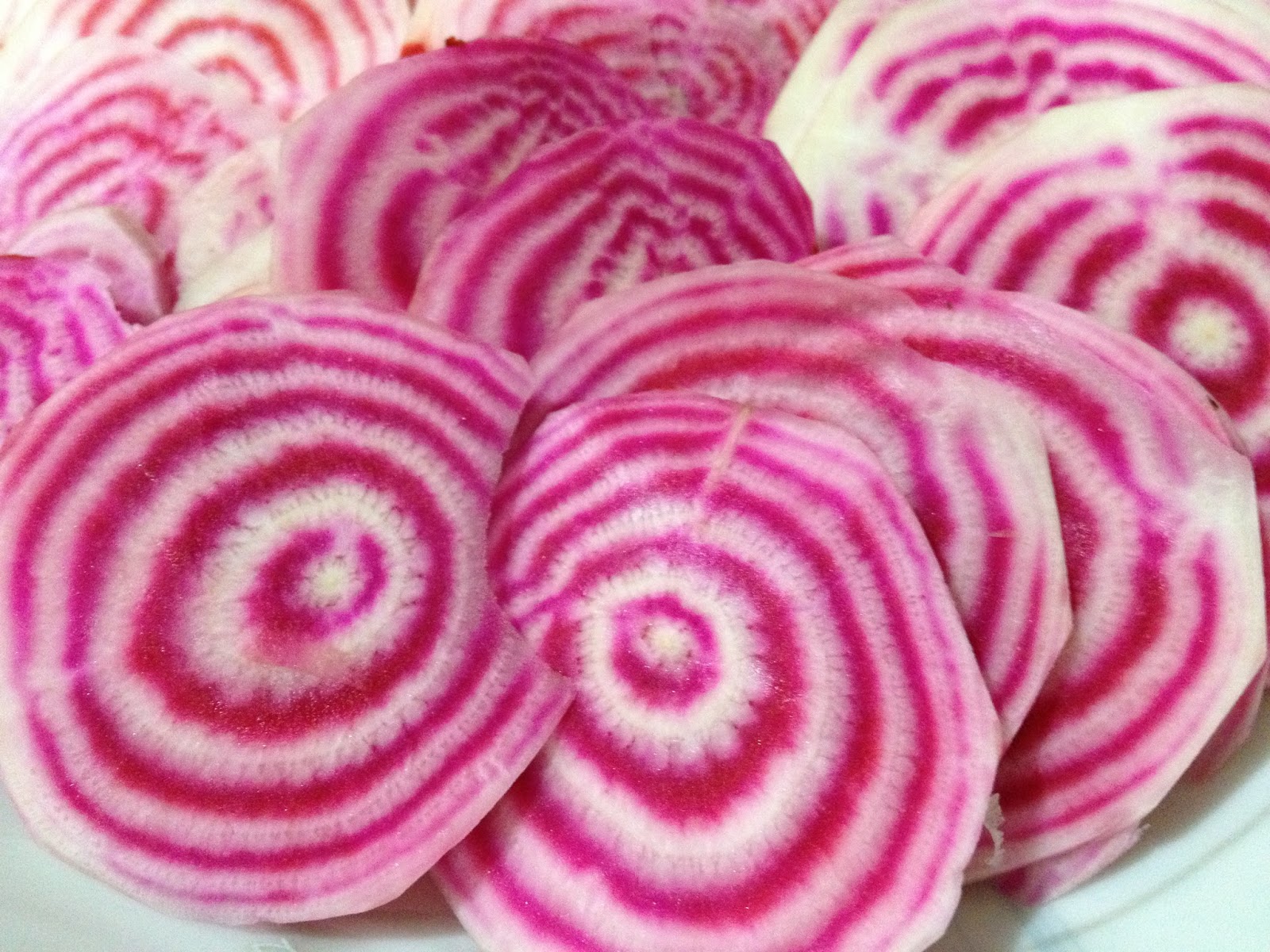
We love the look of candy striped beetroot. When it is sliced raw, the contrasting colours are very sharp and vibrant. This makes a dramatic addition to any salad.
After they're cooked however, the stripes are less obvious and the dark pink and white lines will bleed into one another to create a more even muted tone. We turned this batch into a fresh and healthy quinoa salad.
1 cup cooked red quinoa
4-6 roasted or steamed candy striped beets, cut into 1/2 inch chunks
1-2 roasted eggplants, cut into 1/2 inch pieces
1/2 red onion, thinly sliced
1 cup basil, torn into pieces
1/4 cup mint, coarsely chopped
1/4 Italian parsley, coarsely chopped

Combine the above ingredients. Toss in 1/4 cup balsamic vinaigrette and season with salt and pepper. Chill for 1 hour and serve.

Saturday, April 27, 2013

mango mania

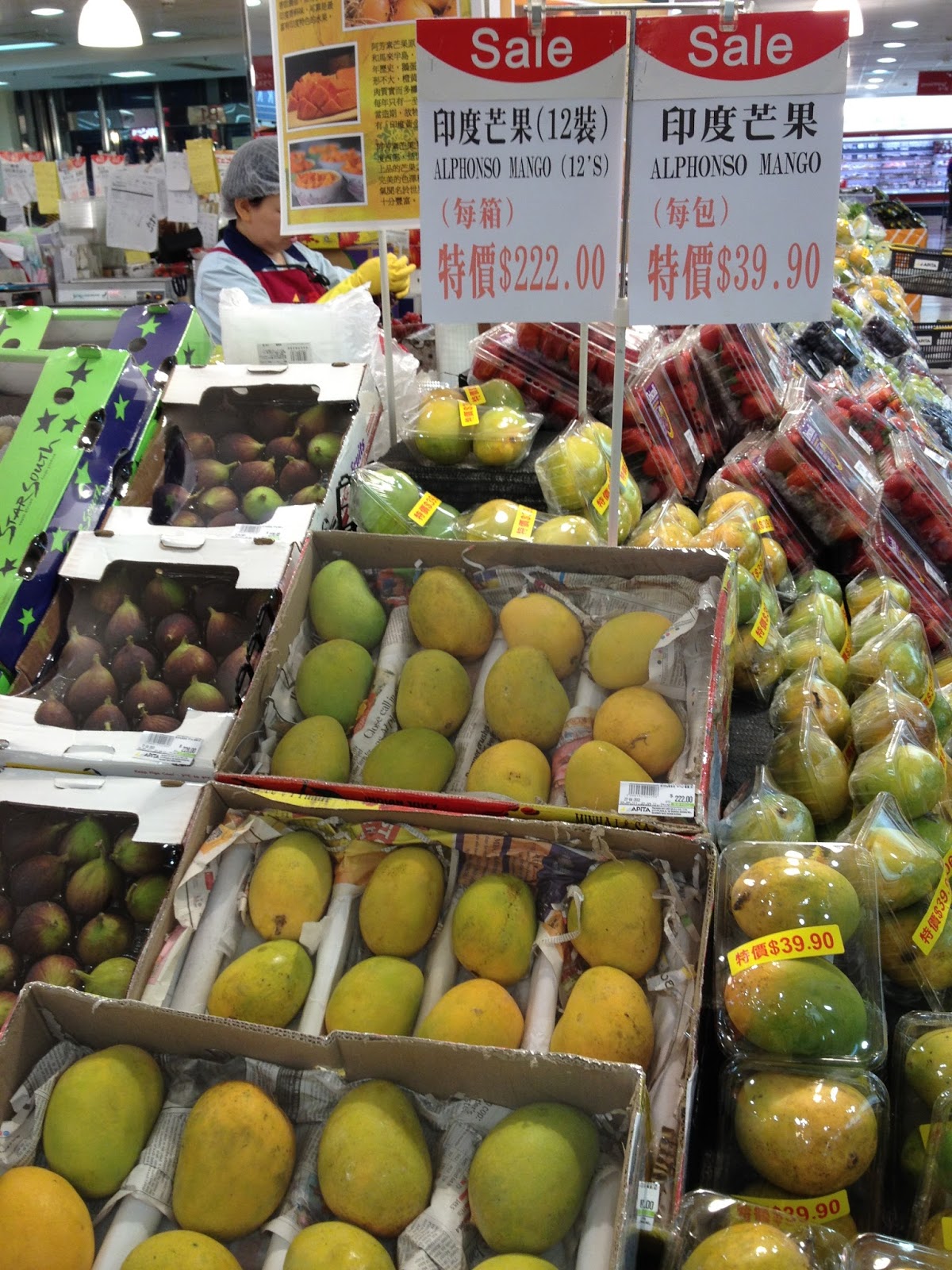
Bet you've never had a mango this good...Alphonso mangoes are here! They are the most delicious underrated tropical fruit. They're ready to eat when they're fragrant and have a little give when handled. And an insider tip, if it looks a little blemished on the outside with brown spots or streaks, not to worry because chances are that it will be even riper and sweeter. Alphonso mangoes have golden orange flesh, are extremely juicy, and very sweet with a floral note that makes its flavour so much more complex than your average mango.
Some supermarkets around town will be selling them by the case.
And speaking of other extraordinary mangoes. I don't know how Alphonsos compare to these Japanese ones, but I'm not about to spend 40x the price to find out.